


History
Although it is the youngest city in Zagreb County, Sveta Nedelja proudly preserves its rich historical heritage, valuable monuments and traces of everyday life that bear witness to the continuous development of the Sveta Nedelja area through the centuries.
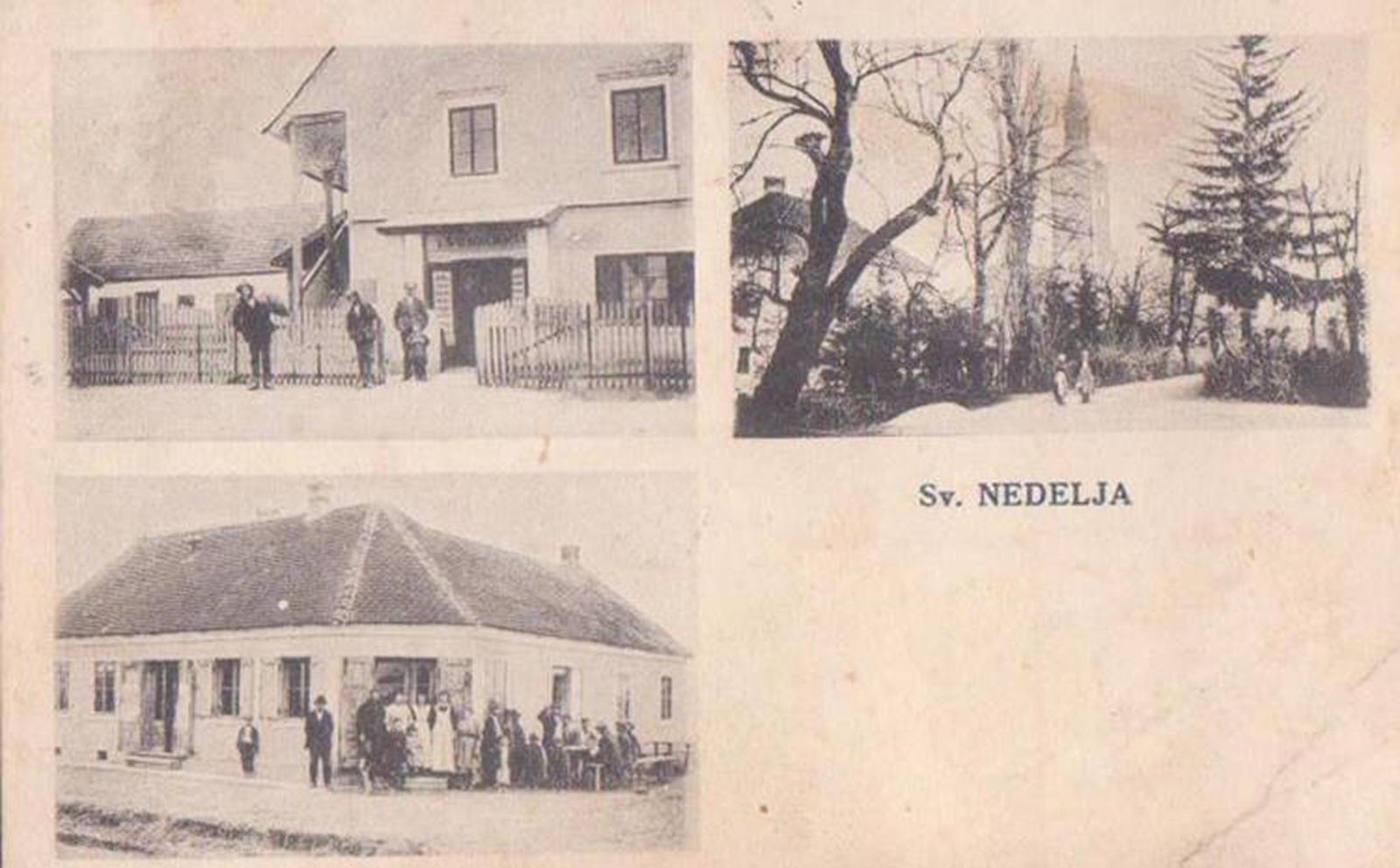
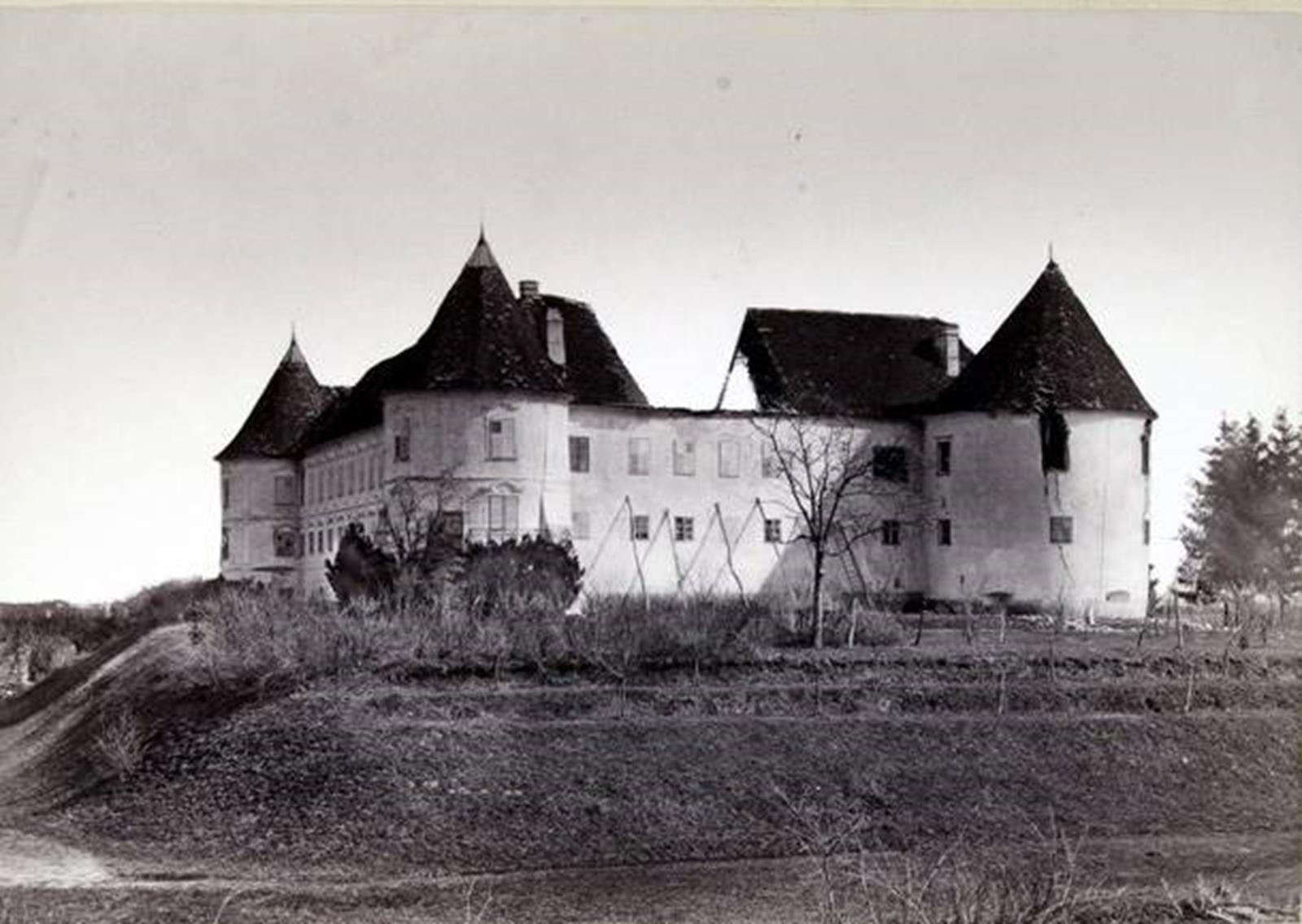
Stories woven into Sveta Nedelja
Set between Zagreb, Samobor and the Sava River, Sveta Nedelja has for centuries been a place where people, trade, defence and daily life came together. Traces of the past are still visible today – from Roman finds and medieval estates to castles, churches and the modern development that has turned Sveta Nedelja into one of the fastest-growing cities in Zagreb County.
Traces of the Romans in the Sveta Nedelja area
Proven settlement of this area dates back to Roman times. The main road of Roman Pannonia, linking Emona and Siscia – today’s Ljubljana and Sisak – passed through here. Beside it, in present-day Jagnjić Dol, a valuable bronze Roman fibula (brooch) dating from the turn of the 2nd and 3rd centuries was found at the Herešinec archaeological site.
In Novaki, a lidless sarcophagus, fragments of Roman bricks and a coin from the time of Constantius I were discovered by chance, suggesting that a Roman settlement once stood there.
The most important evidence of Roman culture was found in Kerestinec – a large 3rd-century stone monument to the Roman dignitary Pontius. The monument was discovered at the end of the 19th century, and until recently a copy of it was on display in the centre of Kerestinec. It is believed that a Roman cemetery, and possibly a small military outpost, was located in the area.
The Middle Ages and the Okić estate
Only indirect evidence survives of the arrival of the Croats and the first centuries of their presence in this area. At the beginning of the Late Middle Ages, in the 12th century, a feudal estate was centred on Okić. The famous Okić fortress was built by the Counts of Okić, who ruled this area from 1193 to 1293.
From the 13th to the 16th century, the villages of Kerestinec, Kalinovica, Mala Gorica, Brezje and Jagnjić Dol belonged to the Okić lordship, later joined by Srebrnjak, Breg (today’s Svetonedeljski Breg) and Sveta Nedelja. The settlements in the north-western part of the Sveta Nedelja area – Strmec, Orešje, Novaki and Rakitje – belonged to the Susedgrad estate. Bestovje is first mentioned as a separate settlement only at the end of the 19th century.
Kerestinec Castle and the Erdödy family
In 1493 the Okić lordship was bought by the Counts Erdödy, who remained its owners until 1860.
In Kerestinec the Erdödy family built a new lowland fortification with Renaissance features – a fortified castle surrounded by wide water-filled moats. Petar Erdödy was granted the noble title of count in 1565, and it was at this time that Kerestinec Castle was being intensively built and extended. Renovation and extension work continued almost until the end of the 16th century.
In 1573 the Peasants’ Revolt also swept through the Sveta Nedelja area, especially around Kerestinec and Stupnik. A large number of rebels gathered around Kerestinec at the beginning of 1573, which is why the area is regarded as one of the key sites of the uprising.
On 3 February 1573 a large detachment of the peasant army, led by Ivan Pasanec, arrived in Kerestinec, with many more peasants joining its ranks. The nobles’ army under Gašpar Alapić arrived soon afterwards, and the decisive battle took place on 6 February at the foot of Kerestinec. The rebel peasants were defeated, and according to the chronicles between 400 and 500 of them were executed.
The growth of the parish and sacral heritage
In the 15th century the Sveta Nedelja area gained its own Catholic parish, the Parish of the Holy Trinity. Although it does not appear in the first list of parishes of the Zagreb Diocese from 1334, the second list, from 1501, mentions the parish priest Martin and the small Gothic church of the time.
The present Baroque Church of the Holy Trinity was built during the 18th century, and its consecration ceremony was held on 14 July 1776. A Baroque guesthouse was built near the church in 1793.
Other valuable sacral buildings in the Sveta Nedelja area also date from the Baroque period. The Chapel of St Roch in Sveta Nedelja took on its present appearance in 1748, while the Church of St Mary Magdalene on the hill above Mala Gorica was built in 1768. The Chapel of St Andrew in Novaki is mentioned as early as the mid-17th century.
Economic development and the modern era
The economic picture of this area has changed significantly over the past fifty years or so. What was once a predominantly farming area has gradually developed into a strong economic and industrial region.
The first industrial plants appeared towards the end of the Second World War, while stronger growth came in the late 1960s. Alongside the industrial centres of Kerestinec, Brezje and Rakitje, the Novaki – Bestovje industrial zone developed, spreading towards Strmec and Sveta Nedelja.
On 30 December 1992 the Croatian Parliament passed the decision to establish the Municipality of Sveta Nedelja, and in July 2006 Sveta Nedelja was granted city status. Today Sveta Nedelja is a modern, well-developed city that successfully brings together a rich history, a thriving economy, natural beauty and a contemporary way of life.